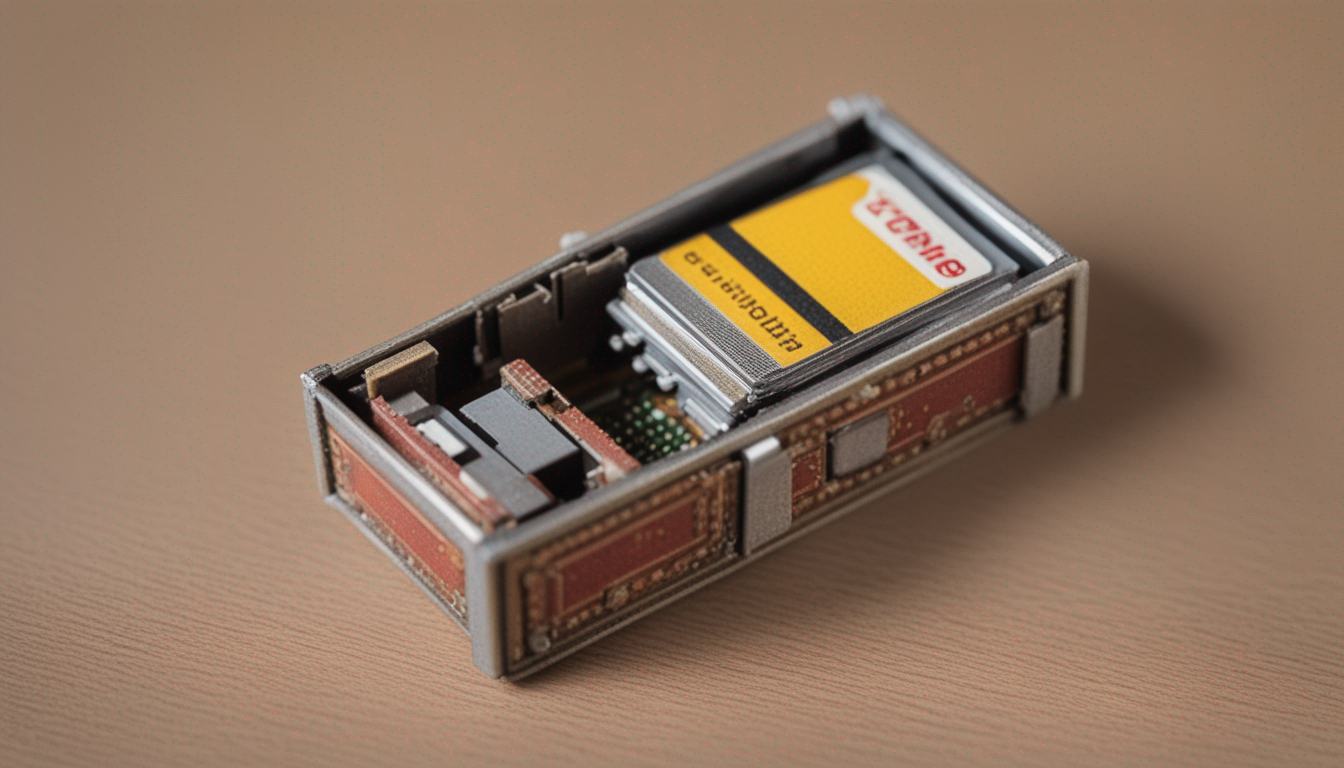
Your phone holds more computing power than the guidance system that landed humans on the Moon, and it does it while sitting silently against your leg. But the genuinely interesting story of miniaturized gadgets isn’t raw specs — it’s the quiet engineering decisions almost nobody notices. Those overlooked details are where the underrated ideas live.
The Bottleneck Isn’t Silicon — It’s Heat
Chips keep shrinking, but heat doesn’t care about your roadmap. A processor the size of a fingernail can still generate enough thermal load to throttle itself within minutes of sustained work. That’s why the best ultra-compact devices are designed around dissipation first: vapor chambers, graphite spreaders, and aluminum unibodies that double as heatsinks. When you evaluate a pocket-sized gadget, look at how it manages heat rather than what its benchmark score claims. A slightly slower device that never throttles will outperform a faster one that does.
The Unsexy Standard That Shrank Your Bag
Gallium nitride chargers are the most underrated hardware of the past decade. A 65-watt GaN brick is smaller than the old 5-watt phone charger and can power a laptop, tablet, phone, earbuds, and camera. Paired with USB-C Power Delivery, it collapses an entire drawer of proprietary adapters into one object. Standardization, not novelty, is what actually made your bag lighter. Most people chase new gadgets while ignoring the cables and power bricks that determine whether those gadgets are usable.
You Already Own a Dozen Instruments
A modern phone carries MEMS accelerometers, gyroscopes, magnetometers, and barometers. Most owners use them for screen rotation and nothing else. That barometer measures altitude and weather trends. The magnetometer detects metal studs and hidden wiring. The accelerometer plus a microphone turns your phone into a vibration analyzer for diagnosing a wobbling fan or an unbalanced washing machine. These sensors cost nothing extra — they’re already paid for and mostly idle.
The Density Penalty Nobody Mentions
Extreme miniaturization has a cost: glue, solder, and sealed enclosures. Batteries become difficult to replace, repairability drops, and devices die earlier than they should. The underrated move is treating battery serviceability as a headline specification. A slightly thicker gadget with a replaceable cell will outlast three sealed ones.
Compact technology rewards people who read the fine print: thermal design, power standards, sensor capability, and longevity. Everything else is marketing.
Actionable Takeaways
- Judge pocket-sized gadgets by thermal design and battery serviceability, not peak benchmark numbers — sustained performance beats burst performance.
- Consolidate around USB-C Power Delivery and a single GaN charger to eliminate redundant bricks, cables, and weight.
- Actually use the sensors you already carry: barometer for altitude, magnetometer for metal detection, accelerometer for vibration diagnostics.