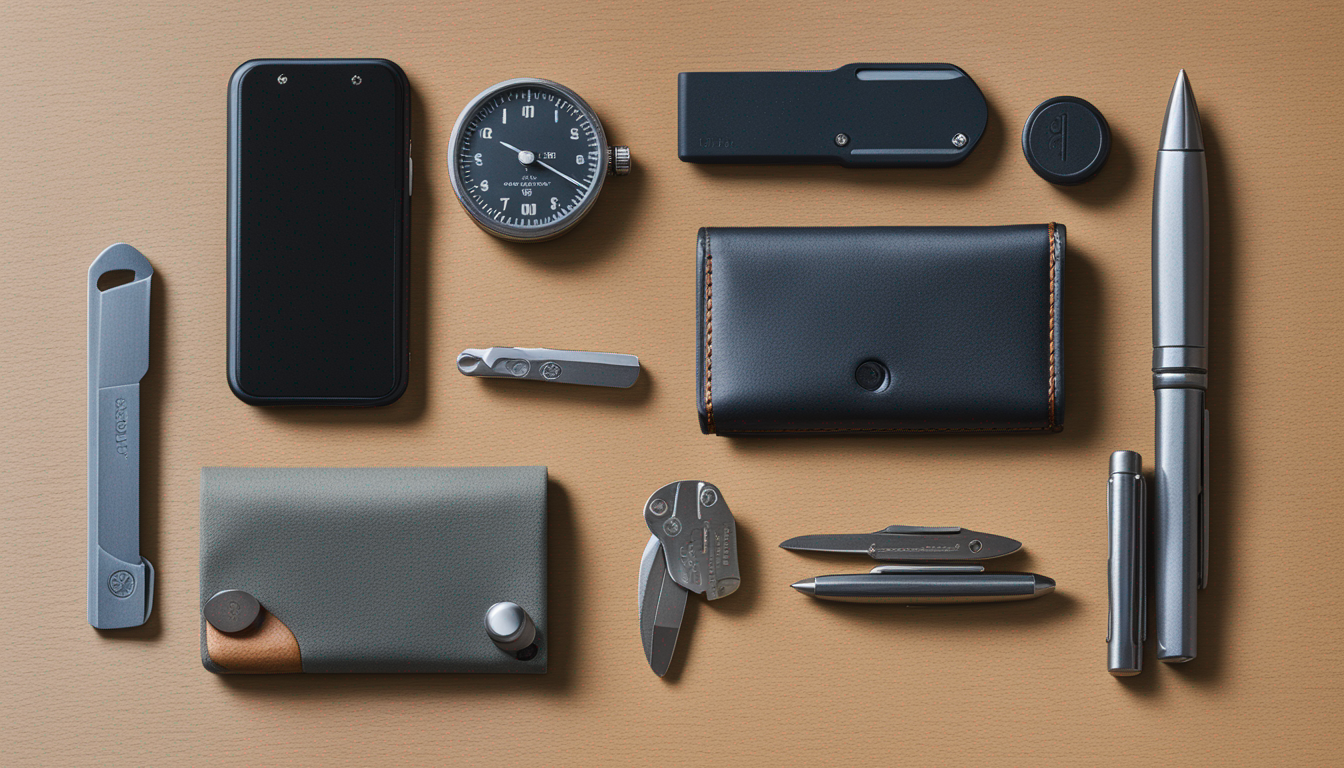
I used to leave the house with a pocket full of plastic rectangles: a wall charger, a USB adapter, a storage drive, a phone stand, and a camera remote. One afternoon, I dumped all five on the counter and realized they collectively did less than a single paperback book — but weighed three times as much.
That started a consolidation project that changed how I think about miniaturized gadgets. Here’s the exact framework I used.
Step 1: Run a Device Overlap Audit
Write down every tiny device you carry or toss into a bag. Next to each item, list its primary job and its required port or power source. You’re looking for redundant flows. For example, a wall charger and a data transfer stick both depend on the same connector type, but they rarely get used at the same time. That overlap is an opportunity.
Step 2: Map the “Good Enough” Threshold
Ultra-compact tools do not need to outperform full-size equivalents. They need to solve the problem in a pinch. I wrote down the five jobs I needed: charge a phone, move files between a laptop and phone, prop up a screen, trigger a camera shutter, and read a memory card. Then I rated how often each job truly required maximum performance. The answer? Almost never.
Step 3: Use the Three-Question Gate
For any miniaturized gadget candidate, ask:
- Can it remove at least two other items from my pocket?
- Can it survive being sat on without snapping?
- Can I operate it with one hand and no app?
If a tool failed any of those questions,
🛍️ Recommended Products
Affiliate links help fund our tech reviews.This helps support our research at no extra cost to you
Convert Wired to Wireless CarPlay 💰 $19.99 | ⭐ 4.2/5