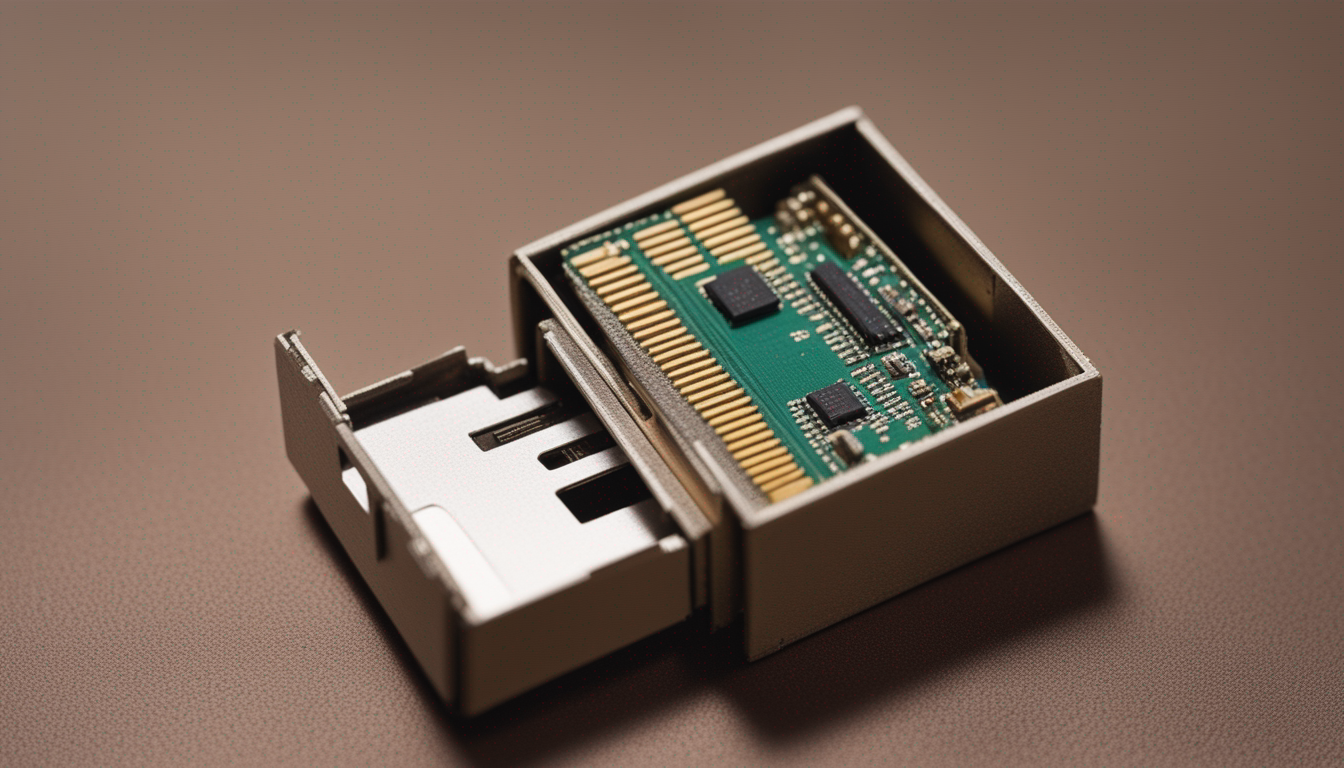
Picture a gadget so tiny you can swallow it by accident – a wireless earbud the size of a jelly bean that slips through the floorboards like a coin. A decade ago, that would have felt like science fiction; today, it’s just a Tuesday. Miniaturization has become a relentless creed in consumer electronics, promising that shrinking hardware automatically delivers better lives. But if we peel back the silicone wafer, a messier story emerges. Smaller tech is indeed the next big thing, just not for the reasons you’ve been told.
The Shrinking Paradox: When Less Is Less
We’ve been trained to equate small with sophisticated. Circuit boards crowd into fingernail-sized modules, batteries slim down to paper-thin foils, and entire computers now hide inside USB plugs. The engineering is breathtaking – until you realize that many of these wonders sacrifice what makes a device useful in the first place. Think of a smart ring that can’t vibrate strongly enough to wake you, or a projector the size of a matchbox that produces an image so dim it’s useless unless you’re in a cave. The obsession with compactness often trims the muscle, not just the fat.
Psychologically, there’s a hidden trap: when objects become almost intangible, our brains start treating them as disposable trinkets. A portable speaker that disappears in the palm of your hand is also easily misplaced in a backpack. A stylus as thin as a toothpick feels elegant, but try using it for twenty minutes and cramping sets in. The race toward micro sizes can generate more low-grade friction than genuine freedom.
Hidden Costs of the Microscopic Race
Beyond ergonomics lies a darker trade-off. The tighter you pack components, the harder they are to repair, upgrade, or even recycle. Heat dissipation becomes a nightmare; a slim tablet might throttle its performance after a few minutes of moderate work because there’s simply no room for even a whisper of airflow. Glue and proprietary soldering replace screws and modularity, turning a cracked screen on a palm-sized media player into a total loss. We applaud the mini-marvel, then quietly toss it in a drawer two years later.
Battery capacity shrinks proportionally, too, but our expectations don’t. A lapel microphone smaller than a chickpea might promise studio-quality sound, yet conk out mid-conversation because the power cell is barely larger than a grain of rice. Industry loves to mask that reality with ever-more-efficient chips, but energy physics doesn’t bend endlessly to ambition. Often, the most “advanced” miniature gizmo becomes a charging-anxiety generator you have to nurse daily.
The Usability Delusion
There’s a near-comical mismatch between laboratory proof-of-concepts and real-world use. I’ve seen a music player so stripped-down that adjusting volume meant navigating a cryptic sequence of triple-taps – a design engineered for minimal footprint, not human fingers. While engineers celebrate a new record for component density, the rest of us are squinting at touchpads barely wider than a thumbtack. Minimalism shouldn’t mean making things actively hostile to interact with.
None of this is an argument against thoughtful miniaturization. Some reductions genuinely open doors: sensors that can be woven into clothing, computational modules that vanish into architectural materials. But the assumption that “smaller” is an unalloyed virtue needs a cold shower. Before you’re dazzled by a product that fits inside a walnut, ask whether it solves a problem you actually have, or just creates a fragile, hard-to-service curiosity.
3 Actionable Takeaways
- Audit for real utility, not spectacle – Next time you’re tempted by a gadget that brags about its microscopic size, physically mimic using it. Are the buttons reachable? Could you operate it with gloves, in a hurry, or when half-asleep?
- Demand transparency on repairability and longevity – Before buying, check if the device can be opened without destroying it. Favor designs that use standard fasteners over adhesive sandwiches, so a tiny tool doesn’t become a brief, expensive affair.
- Reframe “compact” as “context-aware” – The goal isn’t absolute smallness; it’s about fitting gracefully into the moments you need it. A moderately sized device that lasts all day without nursing a charging cable will often serve you far better than a shrunken marvel that vanishes in a drawer.
🛍️ Recommended Products
Affiliate links help fund our tech reviews.This helps support our research at no extra cost to you
Convert Wired to Wireless CarPlay 💰 $19.99 | ⭐ 4.2/5