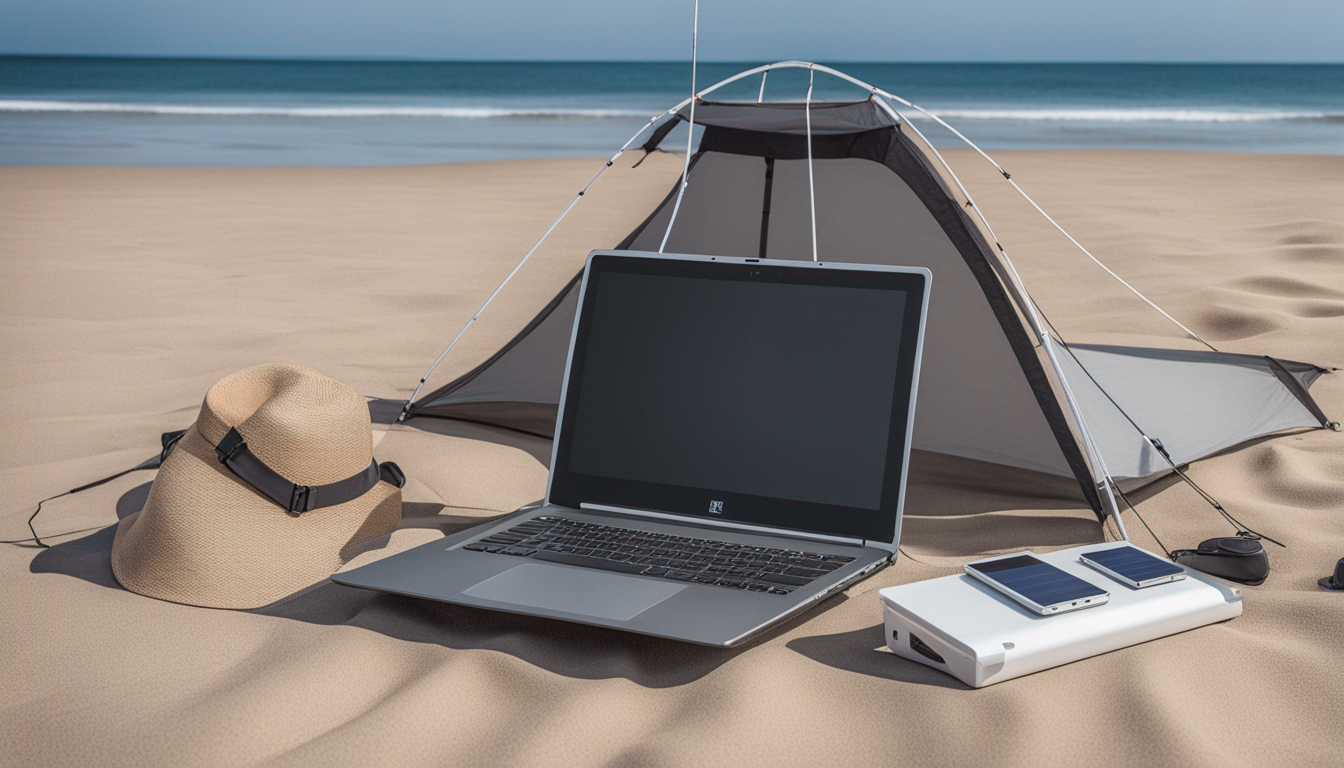
You’re staring at your inbox on a Tuesday afternoon, and a familiar urge creeps in: the desire to pack a bag, book a flight, and work from somewhere else for a few days. It’s not just wanderlust. Psychologists call this “spatial novelty seeking”—the brain’s craving for new environments to break the monotony of predictable routines. When we work from a café in a city we’ve never visited, our brains release dopamine, the neurotransmitter tied to reward and motivation. This isn’t a luxury; it’s a behavioral hack.
The micro-nomad lifestyle—short bursts of remote work in different locations—works because it taps into what behavioral scientists call “temporal landmark theory.” We treat a three-day trip as a mini-reset, a psychological boundary that separates “before” from “after.” This makes us more productive, not less. When you know you only have 72 hours, your brain prioritizes deep work, because scarcity forces focus. It’s the same reason writers finish novels under deadline.
But which cities actually optimize this experience? The best ones share a hidden trait: they offer what urban theorists call “ambient stimulation without overwhelm.” Think of a city like Porto, Portugal—its narrow, winding streets and river views provide gentle visual novelty without the sensory overload of a mega-metropolis. Or consider Kyoto, Japan, where the quiet rhythm of temples and tea houses creates a backdrop that lowers cortisol, making it easier to slip into flow state. Then there’s Medellín, Colombia, where the mild climate and abundant public plazas turn the city into an extension of your office. The key isn’t the Wi-Fi speed (though that helps). It’s the psychological distance from your normal context.
When you work from a new city, you also trigger what psychologists call “the Hawthorne effect”—the tendency to perform better when you’re aware of being in a novel situation. You dress slightly sharper, you take notes more diligently, and you listen more carefully in Zoom calls. This isn’t magic; it’s a cognitive shift that happens when your brain senses “this is different, so pay attention.”
Actionable Takeaways
- Schedule your trips around psychological resets. Choose cities that offer a change in rhythm, not just scenery. A quiet coastal town works better than a noisy capital if your goal is deep work.
- Use the 72-hour rule as a productivity constraint. Tell yourself you have exactly three days. This artificial deadline triggers the scarcity mindset that sharpens focus.
- Select cities with “third places”—public spaces that are neither home nor office. Parks, libraries, and plazas encourage serendipity and break mental ruts. That’s where your best ideas will surface.
🛍️ Recommended Products
This article contains affiliate links.This helps support our research at no extra cost to you
1. Logitech Brio 101 Full HD 1080p Webcam for Meetings
Works with Zoom, Microsoft Teams, Nintendo Switch 2’s new GameChat Mode, USB-A,-Black 💰 $38.66 | ⭐ 4.4/5
2. Portable Handheld Turbo Fan
5 Speed Mini Personal Fan with Strong Airflow, Foldable 3 in 1 Rechargeable Battery Operated 💰 $14.99 | ⭐ 4.7/5